Describe the organisation
Provide legal details, sites, activities, headcount, shifts, standard and current certification position.

Delivering trusted services with international capability and local presence. Begin your journey with clear guidance and expert support.
Start with the essentials and we'll guide you.
Which management system, organisational activities and locations should be assessed against which standard?
The answer determines the audit scope, required competence, audit duration and the wording that may appear on a certificate. A useful application therefore starts with the organisation's real activities—not with a generic request for “an ISO certificate”.
See what defines the scopeConfirm the exact standard, required scope and any accreditation expectations.
Identify the management system and operational boundaries to be audited.
Share the current certificate, audit history and intended certification cycle.
Cerca per standard ISO, servizio, settore o obiettivo aziendale per esplorare le opzioni disponibili con TNV Global Limited.Search by ISO standard, service, sector, or business objective to explore the options available through TNV Global Limited.
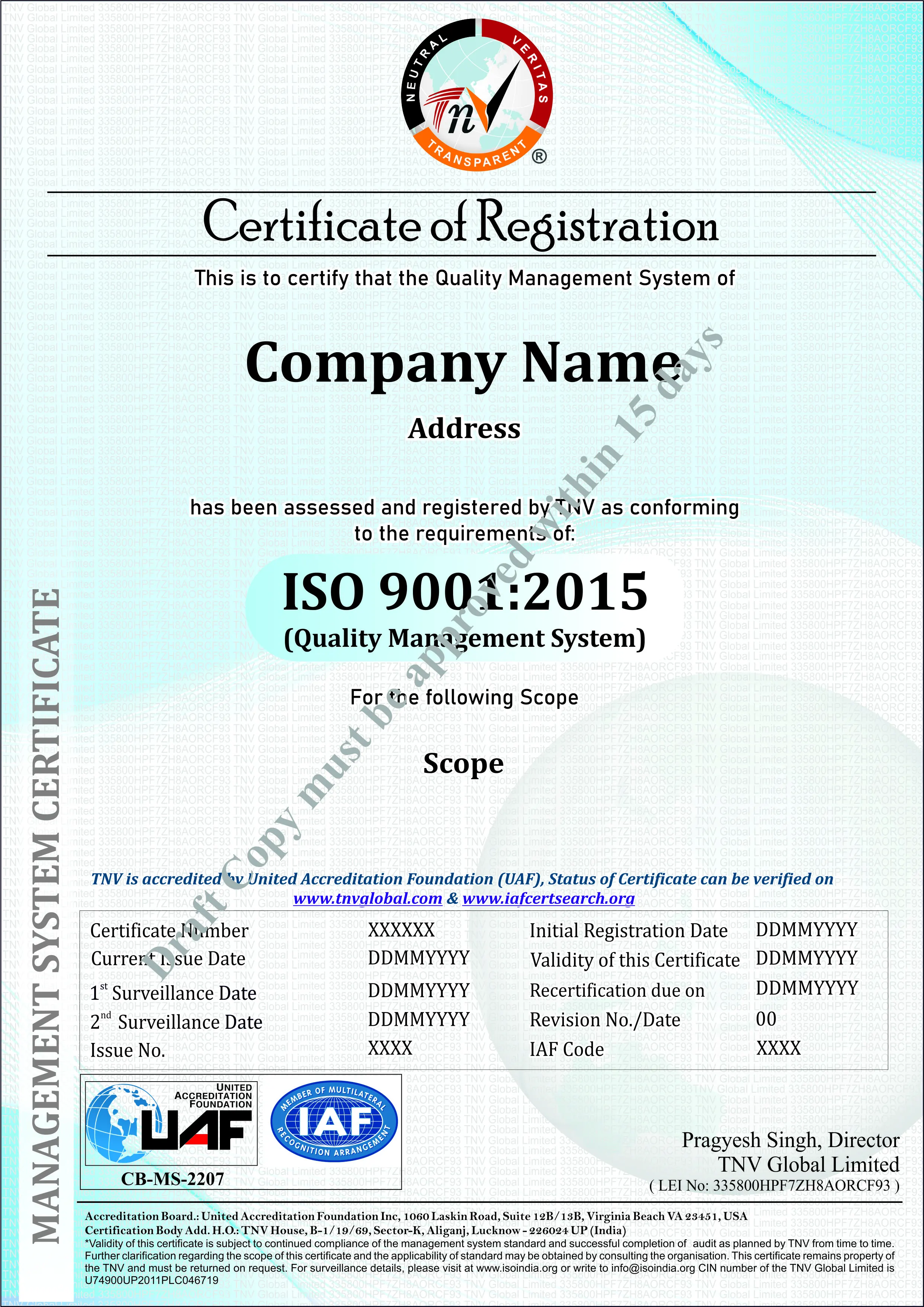
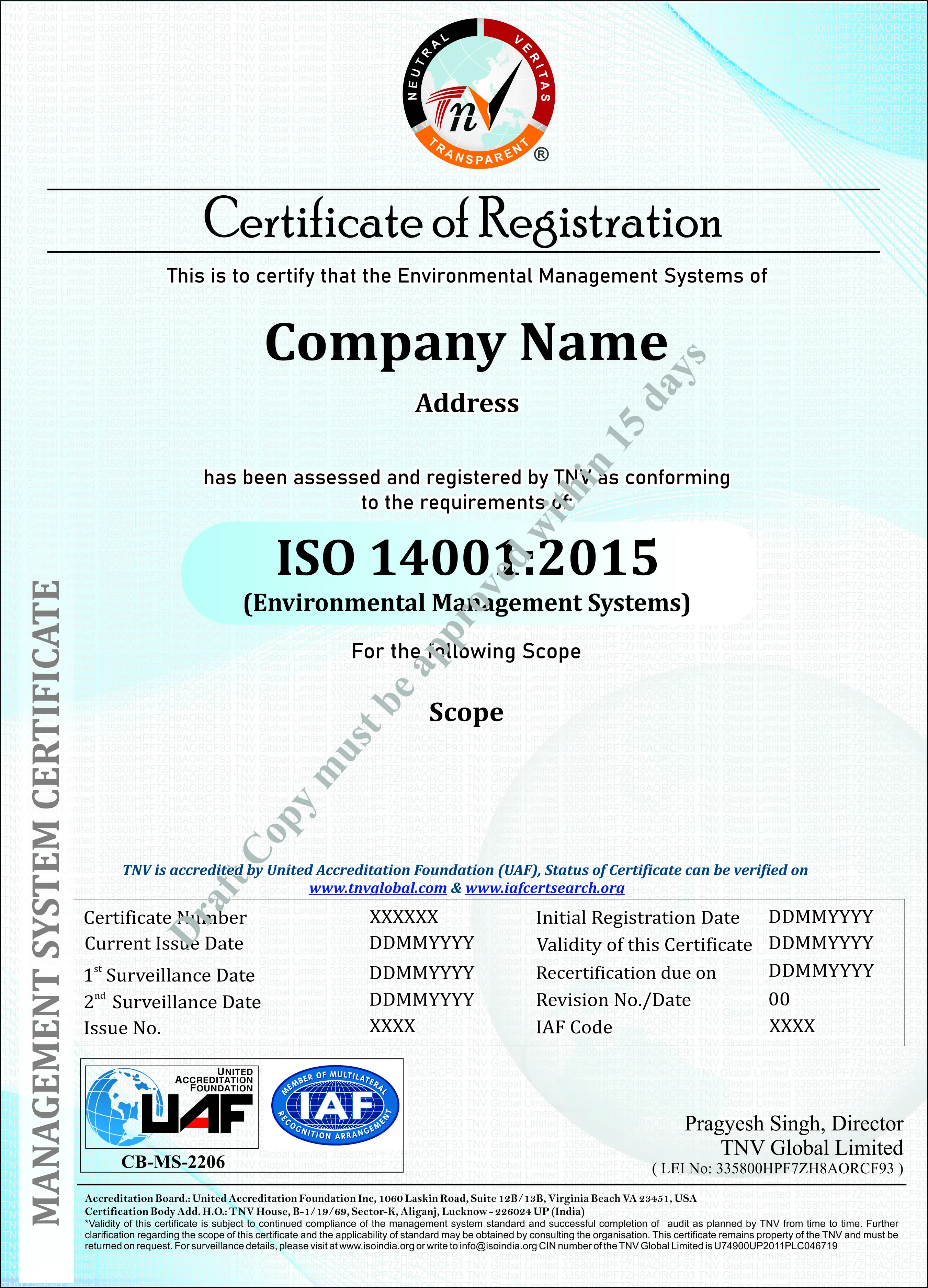
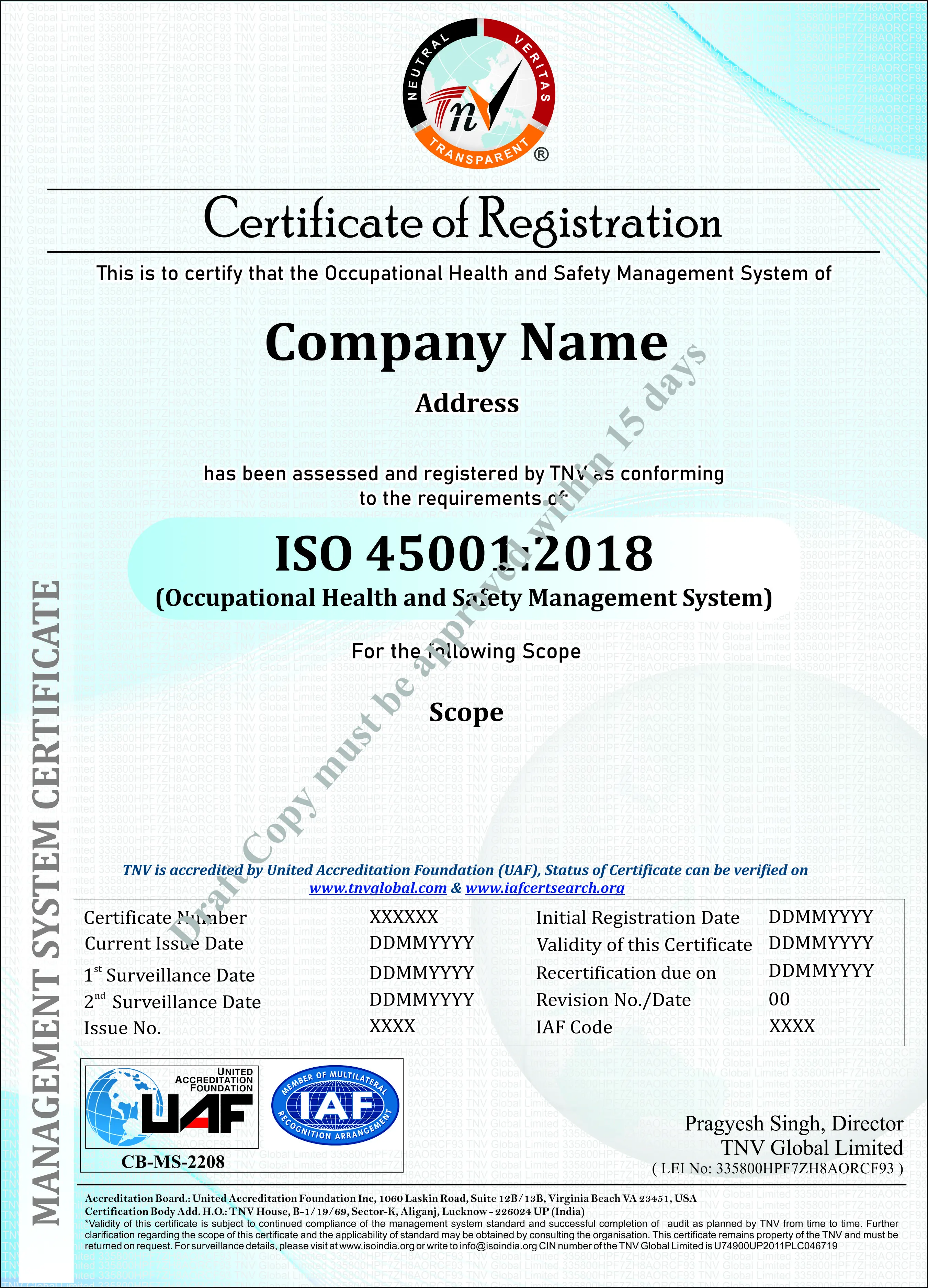
Visualizza un esempio di documento di certificazioneView a sample certification document
Solo a scopo illustrativo. Il formato del certificato e lo stato di accreditamento dipendono dal servizio applicabile e dall'ambito approvato.For illustration only. Certificate format and accredited status depend on the applicable service and approved scope.
Certificazione dei sistemi di gestione per la qualità, pensata per supportare processi coerenti, l'orientamento al cliente e il miglioramento continuo.Certification of quality management systems designed to support consistent processes, customer focus, and continual improvement.
Certificazione dei sistemi di gestione ambientale, pensata per aiutare le organizzazioni a gestire le responsabilità ambientali e migliorare le prestazioni.Certification of environmental management systems designed to help organisations manage environmental responsibilities and improve performance.
Certificazione dei sistemi di gestione della salute e sicurezza sul lavoro, pensata per aiutare le organizzazioni a gestire i rischi sul luogo di lavoro e migliorare la protezione dei lavoratori.Certification of occupational health and safety management systems designed to help organisations manage workplace risks and improve worker protection.
Certificazione dei sistemi di gestione della sicurezza delle informazioni, pensata per proteggere le informazioni e gestire sistematicamente i rischi di sicurezza.Certification of information security management systems designed to protect information and manage security risks systematically.
Certificazione dei sistemi di gestione della sicurezza alimentare per le organizzazioni operanti nella produzione alimentare e nella filiera.Certification of food safety management systems for organisations operating across the food production and supply chain.
Certificazione dei sistemi di gestione per la qualità per le organizzazioni coinvolte nella progettazione, produzione o fornitura di dispositivi medici.Certification of quality management systems for organisations involved in the design, production, or supply of medical devices.
Certificazione dei sistemi di gestione degli asset, pensata per supportare un controllo strutturato, la creazione di valore, la gestione del rischio e la pianificazione del ciclo di vita.Certification of asset management systems designed to support structured control, value, risk management, and lifecycle planning.
Certificazione dei sistemi di gestione anticorruzione, pensata per aiutare le organizzazioni a prevenire, rilevare e affrontare i rischi di corruzione.Certification of anti-bribery management systems designed to help organisations prevent, detect, and address bribery risks.
Certificazione dei sistemi di gestione dell'energia, pensata per aiutare le organizzazioni a migliorare le prestazioni energetiche attraverso un approccio strutturato.Certification of energy management systems designed to help organisations improve energy performance through a structured approach.
Certificazione dei sistemi di gestione dell'intelligenza artificiale, pensata per supportare una governance responsabile, la gestione del rischio e un uso controllato dell'IA.Certification of artificial intelligence management systems designed to support responsible governance, risk management, and controlled use of AI.
Revisione indipendente delle capacità del fornitore, delle attività produttive, della documentazione e dei punti di ispezione concordati.Independent review of supplier capability, production activities, documentation, and agreed inspection points.
Verifica della quantità, qualità, imballaggio e criteri di spedizione del prodotto concordati prima della spedizione.Verification of agreed product quantity, quality, packaging, and shipment criteria before despatch.
Supporto tecnico di ispezione per attrezzature, progetti e attività industriali rispetto a un ambito concordato.Technical inspection support for equipment, projects, and industrial activities against an agreed scope.
Verifica degli inventari organizzativi dei gas a effetto serra e delle informazioni correlate rispetto a criteri definiti.Verification of organisational greenhouse gas inventories and associated information against defined criteria.
Supporto di verifica indipendente per le informazioni quantificate sull'impronta di carbonio del prodotto e i confini di rendicontazione.Independent verification support for quantified product carbon footprint information and reporting boundaries.
Valutazione indipendente di progetti, dichiarazioni ed evidenze relative ai gas a effetto serra rispetto a un programma o criteri concordati.Independent evaluation of greenhouse gas projects, statements, and evidence against an agreed programme or criteria.
The same process pattern used on the homepage is extended here with the information organisations need at each certification stage.
Provide legal details, sites, activities, headcount, shifts, standard and current certification position.
Capture the submitted information and identify obvious gaps before technical review.
A documented request that can move into scope, competence and duration review.
A concise, accurate application is more useful than uploading a large collection of unrelated documents.
Legal name, registered address, primary contact and authorised representative.
The exact standard and edition named by the organisation, customer or tender.
A clear description of the products, services and activities to be covered.
Locations, headcount, shift arrangements and relevant remote or temporary activities.
Current certificate, previous audit information or transfer details where applicable.
Before relying on a certification route, verify the organisation, applicable accreditation scope, certificate wording and intended acceptance requirement.
Review the current accreditation record and whether the requested activity falls within scope.
02RecognitionUnderstand how the certificate may be evaluated by customers, procurement teams or other markets.
03DisclosureConfirm the relationship between TNV Global Limited and this Italy-focused website.
04Scope clarificationAsk for written clarification when a tender or customer requirement uses ambiguous wording.
These answers explain the route at a practical level. Standard-specific and scope-specific details are confirmed during application review.
Start with the management issue, contractual requirement or tender clause the organisation needs to address. The exact standard should be confirmed before the application is finalised.
Potentially, but the organisational relationship, common management system, activities, site complexity and applicable certification rules must be reviewed.
Stage 1 reviews readiness, scope and key management-system information. Stage 2 evaluates implementation and effectiveness through audit evidence.
No. The application begins review and planning. Certification follows only after the required audit stages, resolution of relevant findings and an independent certification decision.
A transfer route may be considered after reviewing the current certificate, issuing body, audit status, outstanding findings and applicable transfer conditions.
Verify the standard, scope wording, accreditation expectation, geographic requirement and any sector-specific condition before applying.
Submit the application details for review, or contact the Italy team when the requirement is still unclear.